
Compassion After Truth— from Metaphysics to Civic Life
The course will start March 15th, 9:00am CTD
Course description
The contemporary meaning- and sense-making crisis is often framed as an epistemic problem: we lack the right stories about ourselves, and this deficiency is said to account for our isolation, fragmentation, and affective exhaustion. This course begins from a different assumption. Our experience of alienation, rootlessness, and estrangement is not primarily epistemic but phronetic. It arises from a breakdown in our economy—from the ways our political economy and material infrastructures have both failed to provide platforms for encountering the phenomenal experience of an actual and authentic we. If this diagnosis is correct, then the problem cannot be resolved by narrative alone. Rather, it demands a reorientation towards truth, value production, and civic participation. In short, the prescription is economic in character: a transformation in how value is produced, shared, and sustained in relation to our social and material environments. This course asks students to center truth as the principal relational good for overcoming the meaning- and sense-making crisis—one which must be cultivated both as an individual capacity and through the design and maintenance of our civic institutions.
In this course, we will practice encountering the truth—both that which is comfortable and uncomfortable—as we pursue the design of better forums for civic life.
This course includes 5 two-hour Zoom classes with Justin Carmien
Module One: March 15th, 9:00am CTD
Module Two: March 22nd, 9am:00 CTD
Module Three: March 29th, 9:00am CTD
Module Four: March 5th, 9:00am CTD
Module Five: March 12th, 9:00am CTD

Course Details
Module 1: Why Compassion Fails Us in Public Life
Pre-module reading: A Case Against Compassion
This opening session helps participants learn to see how compassion currently operates in political, media, and civic contexts. Drawing on A Case Against Compassion, we examine how compassion has become instrumentalized within attention economies, producing cycles of outrage, moral performance, and fatigue that undermine truth and authenticity as democratic mechanisms. Rather than treating burnout as a personal failure or psychological deficit, participants are invited to understand it as a structural feature of contemporary public life. The session concludes by introducing metaphysics not as abstraction, but as a necessary thinking space for understanding why our habitual explanatory frameworks fail to address the crisis of truth and participation.
Module 2: The Conditions of Truth. The Proiectum
Pre-module reading: select passages from Metaphysics of the Aletheyein, Division One
This session equips participants with a new orientation toward truth and agency by introducing the proiectum as the structure within which truth becomes possible. Participants learn why neither psychology nor sociology alone can explain civic breakdown, and why the Self is not the ultimate ground of public reality. By rethinking the relationship between the Self and truth, students gain a new orientation toward disagreement, legitimacy, and responsibility in shared civic spaces.
Module 3: The Subiectum of Civic Life. The Aletheyein
Pre-module reading: Everybody Wants to Be Closer to Free
Participants will encounter the aletheyein as subiectum (the cause or condition for the being of the world), learning to see truth as disclosure, projection, and relationality rather than possession. This object-oriented framework helps explain why different communities inhabit genuinely different worlds rather than merely holding different opinions. Drawing on Everybody Wants to Be Closer to Free, this session develops polytheism as disposition—a civic sensibility which allows participants to navigate plurality without relativism or moral collapse.
Module 4: From Truth to Compassion to Participation
Pre-module reading: Compassion After Truth
This session bridges metaphysics and practice. Drawing on Compassion After Truth and examples from neighborhood governance and block club leadership in Chicago, we examine how truth must be disclosed before compassion can function meaningfully. The focus is on cultivating forms of engagement which do not depend on emotional unanimity or moral consensus. Students explore what it means to stay involved in public life without needing to resolve every disagreement affectively.
Module 5: Sustaining Relational Goods Production. Koinal Political Economy
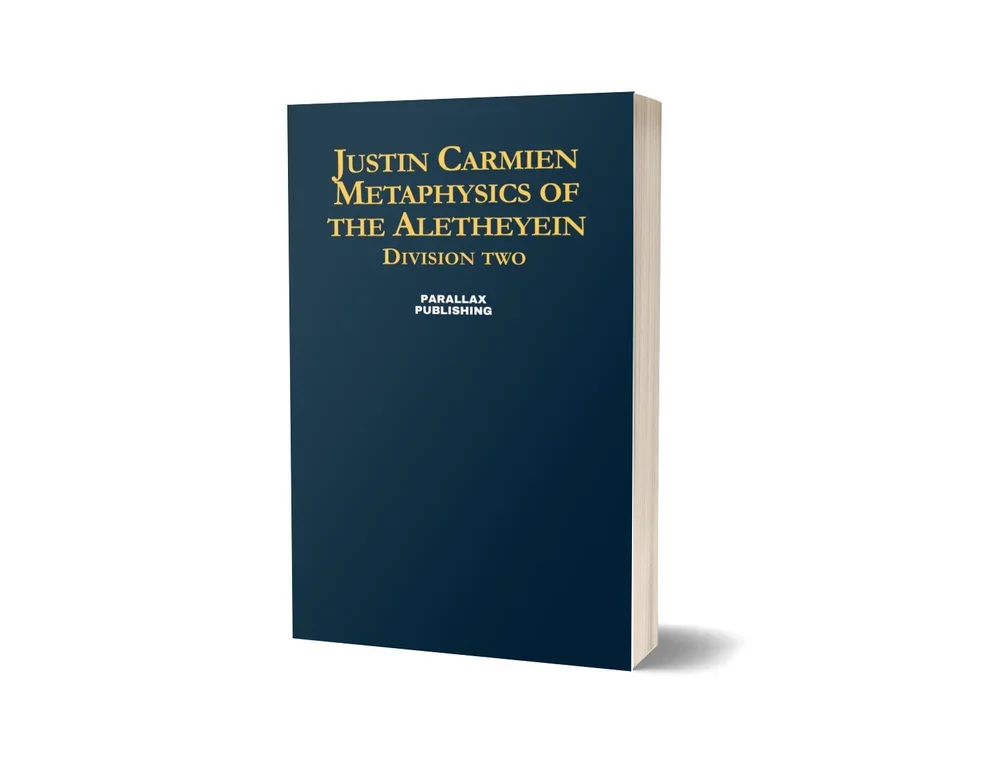
Pre-module reading: Metaphysics of the Aletheyein, Division Two
The final session turns toward constructive civic action. Drawing on Division Two of Metaphysics of the Aletheyein, participants learn to distinguish between private goods, public goods, and relational goods, envisioning a genuine koinial political economy. The session explores how durable forms of civic life are produced not through sentiment or consensus, but through shared practices that generate value in relation. Participants leave with a clearer understanding of how plurality can be sustained without nihilism, and how political economy can be reimagined as the production of shared worlds rather than merely the distribution of resources.
About your Instructor
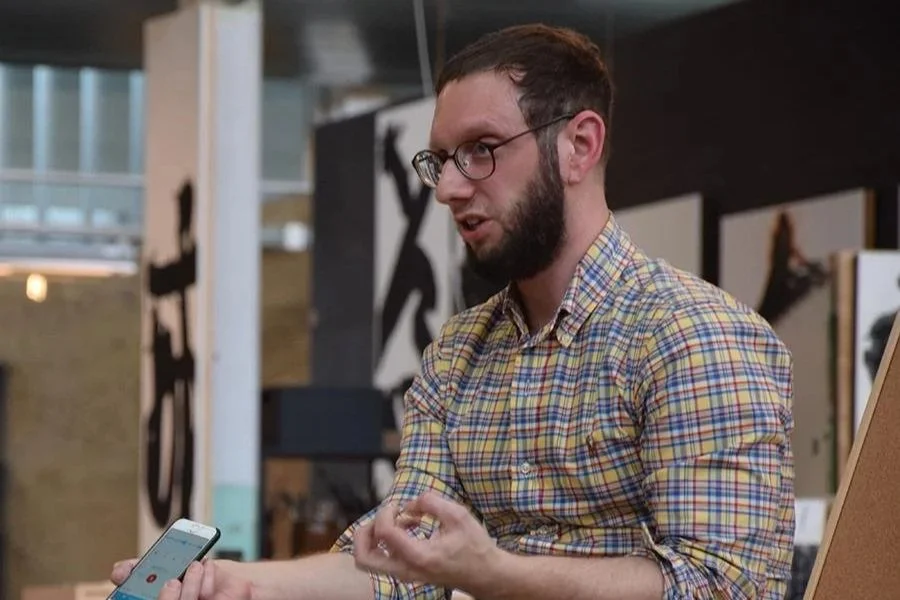
Justin Carmien is the author of the book Metaphysics of the Aletheyein and Division Two: First Economics Philosophy. He currently serves as the president of his neighborhood association in Edgewater, Chicago, and works as a designer for the Government Finance Officers Association, a local government think tank based in Chicago.